- The Immigration Intel Report
- Posts
- Immigration Intel — October 24, 2025
Immigration Intel — October 24, 2025
Clarification on the $100k H-1B fee reveals winners & losers, Project Firewall targets, and official USCIS case processing times increase

Finn Reynolds
October 24, 2025
🍁 Happy Friday! Today's newsletter is an information-packed 1,112 words, a 5-min read.
📅 Immigration Insiders Meeting: If you haven’t already, register for our meeting on Oct 30 with Doug Rand—former Senior Advisor to the USCIS Director.
🎧 On the Pod: Andrew Kreighbaum—Immigration Reporter at Bloomberg Law—joined me yesterday to combine his excellent reporting with Lawfully’s latest analyses on the next phase of the $100k H-1B fee saga, the status of the ‘Weighted Selection’ rule, and much more.
You can listen to it on the Realtime Immigration podcast feed.
1 big thing: Clarification on the $100k H-1B fee reveals winners & losers
On Monday, USCIS clarified which case types are subject to the $100k H-1B fee.
This is impacting practitioners already. As of today, I’ve heard from multiple attorneys that their clients have received RFEs requesting the $100k fee be paid before the case can proceed with processing—for multiple different case situations.
At Lawfully, we’re working to quantify how many H-1B cases are currently receiving a request that the fee be paid. We’re monitoring our database of thousands of pending H-1B cases, waiting to see if a new type of case update that requests the fee appears on the USCIS Case Status Online page—but as of yet, there is nothing new.
Tip-line: If you’re a practitioner and a message on the Case Status Online page requesting the fee, shoot me an email at [email protected].
But, looking ahead: This clarification from USCIS provides new insight into which employers may need to recalibrate their filing and sponsorship strategies—in particular for next year’s H-1B lottery.
Using FY 2024 H-1B cap data obtained by Bloomberg via a FOIA request, I analyzed the breakdown of selected and approved H-1B cap petitions by consular notification versus change-of-status.
It was roughly a 50/50 split that year (2023), with about 44,000 H-1B cap petitions approved with consular notification.
Under the USCIS clarification, that group is one of the largest—if not the largest—now subject to the $100K fee.
What’s most revealing, though, is the company-by-company breakdown. The table below is a snapshot of the 15 companies that secured the most H-1B cap approvals in FY 2024.
Note: I'm intentionally not identifying the companies by name here.
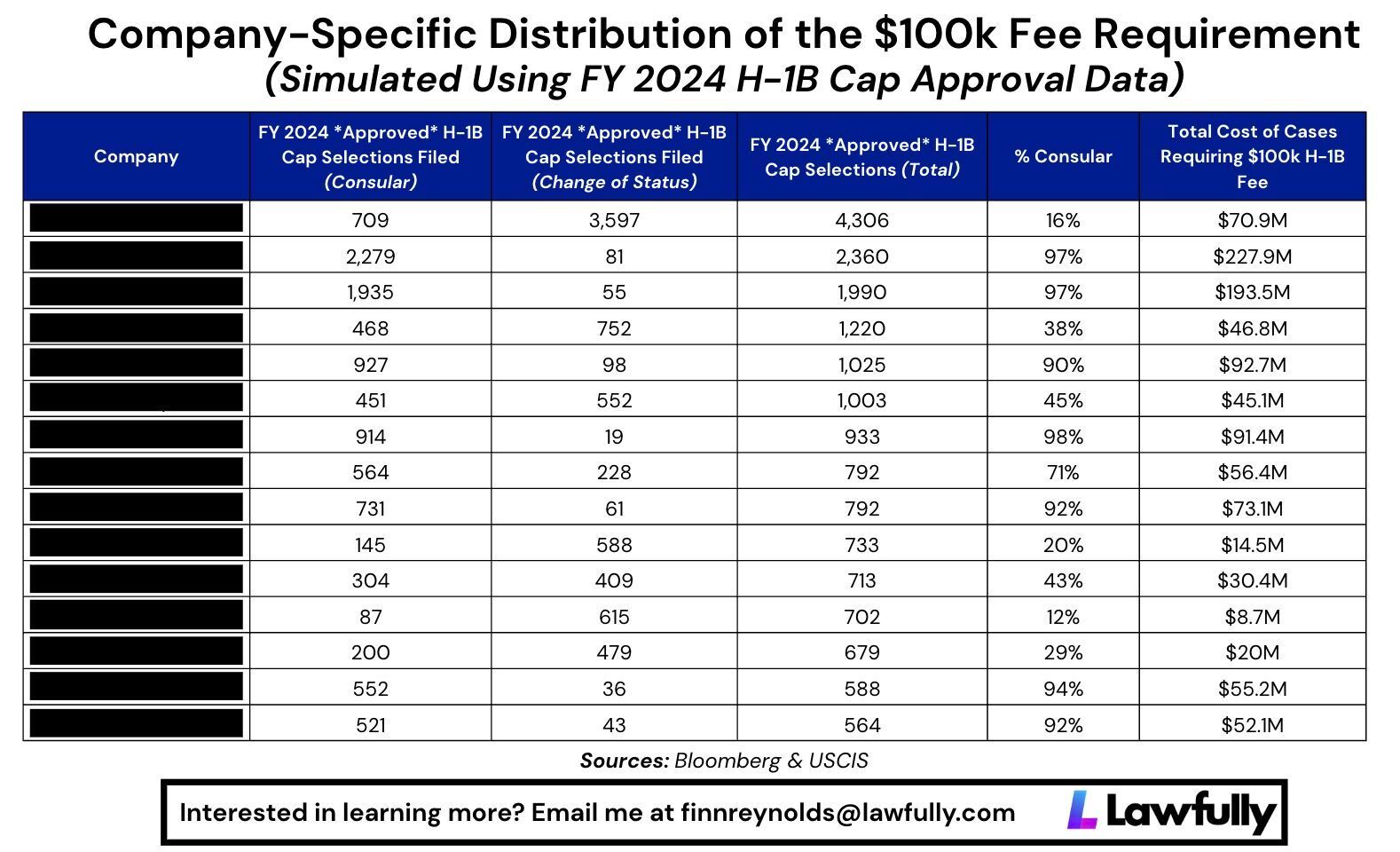
The bottom line: For many companies, 90% or more of their cases were approved with consular notification—all of these cases would require payment of the $100k fee under this new guidance. That could rack up a price-tag of roughly $200M for some companies.
Other companies filed mostly change-of-status petitions—primarily for F-1 OPT and STEM OPT holders already in the U.S.—leaving them far less exposed to having to pay the fee to secure H-1B sponsorship for their employees.
For the latter group, shifting just a handful of the individuals that they register—change-of-status only, no consular notification—in next year’s lottery could entirely insulate them from paying the fee.
For the former group, avoiding the fee would involve drawing from an entirely new pool of applicants for the lottery. It’s possible—yes—but the reason the breakdowns look like this involve complex talent acquisition strategies and budgets at multinational companies.
That’s not so easy to shift in under 6 months—especially with the uncertainty of whether or not this fee will even still be required in March.
Speaking of which, the caveats to all of this: First, two lawsuits—including one from the heavyweight U.S. Chamber of Commerce—have already been filed challenging the $100K fee, making it increasingly likely the continued implementation gets tied up in the courts during next year's H-1B cap.
Second, even if enforced, the vast majority of employers will likely avoid filing cases with consular notification altogether to circumvent the $100K charge.
And third, the proposed 'Weighted Selection' rule adds yet another layer of consideration for how this fee will impact next year’s lottery. If fewer registrations are submitted due to employers being deterred by the $100K fee, the selection odds will change for each prevailing wage group.*
*The selection odds that USCIS laid out (Level I ≈ 15%, Level II ≈ 31%, Level III ≈ 46%, Level IV ≈ 61%) in the rule are estimates—and they will change if the total number of registrations and pool of prevailing wage levels change in next year's lottery, which they likely will.
Stay tuned: There are still so many factors—known and unknown—that could reshape next year’s H-1B lottery.
We’re working on something new at Lawfully that will help all immigration practitioners better plan and strategize for next year’s lottery with the wide-range of uncertain scenarios ahead of us.
Shoot me an email at [email protected] if you want an early look.
2. The likely first targets of Project Firewall
The news on the Dept. of Labor’s Project Firewall initiative has been quiet since the government shutdown.
But very soon after the government reopens, I anticipate we will begin hearing rumors—and official announcements—about investigations and audits of corporate H-1B programs.
Based on intel I’ve collected, I believe the likeliest early targets of the initiative will be companies sponsoring a large number of H-1B employees who
are working at multiple worksites, and/or
working at secondary entities
I looked at the latest LCA data from the Dept. of Labor—covering Apr - Jun 2025—to show how large these groups are in the overall H-1B landscape.
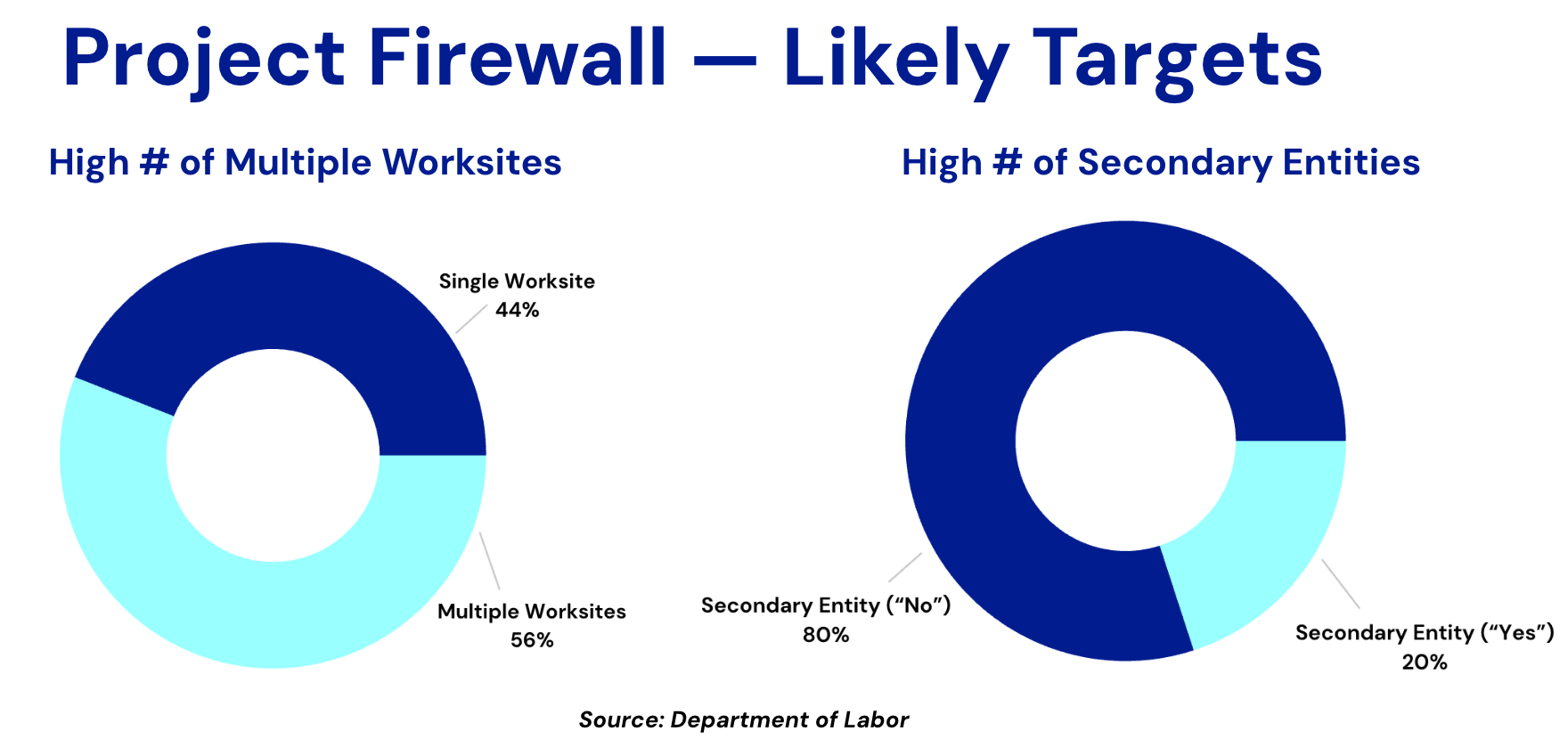
As I gather more intel—something I’m actively working on—I’ll have more to share on this in a future newsletter.
But for now: If you’re a practitioner and you or your clients fit into one of these groups, it’s never too early to do quality assurance checks on the state of your H-1B compliance.
3. Official USCIS case processing times increase
On occasion, USCIS will do a big update of their official case processing times.
It’s important to note that USCIS reports case processing times based on a lagging metric. They calculate processing times based on how long it took 80% of cases to be completed from receipt to decision in the past six months.
Here are some notable highlights of cases that saw processing time increases this week:
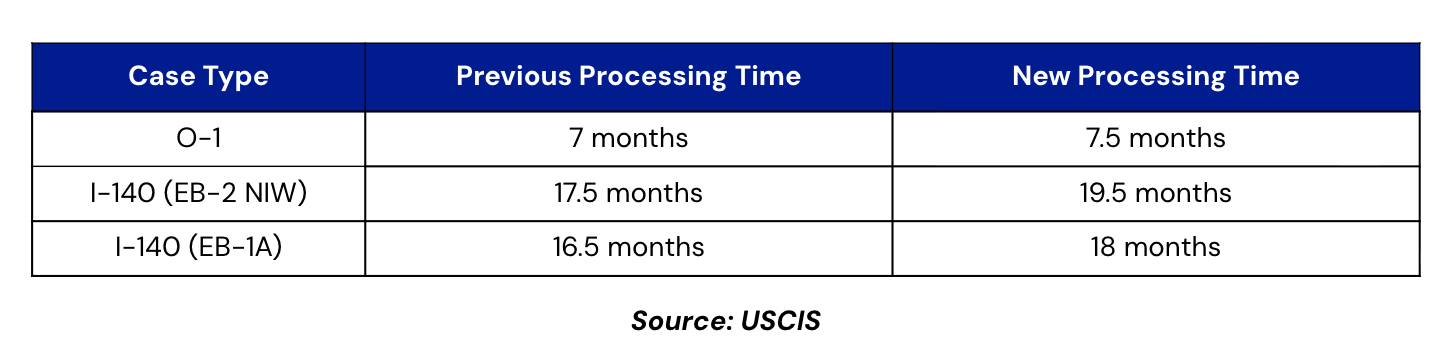
We track thousands of these cases at Lawfully, and can track the actual, real-time processing times.
The good news: Many O-1, EB-1A, and EB-2 NIW cases filed with regular processing are approved many months sooner than the official USCIS processing time indicates.
The bad news: Processing times are still increasing steadily each month—and nearly across-the-board for all case types.
Our analysis shows this will only continue in the coming months.
If you’re interested in seeing more of our data and learning more, shoot me an email.
- - -
📩 That’s it for this week! I want to hear your feedback and questions, so drop me a note anytime at [email protected].
See you next week!