- The Immigration Intel Report
- Posts
- Immigration Intel — October 31, 2025
Immigration Intel — October 31, 2025
EAD renewals by the numbers, watch for H-1B processing disruptions post-shutdown, and intel on new rule for EB-2 NIW and EB-1A criteria.

Finn Reynolds
October 31, 2025
🎃 Happy Friday! Today's newsletter is a not-so-spooky 723 words, a quick 3-min read before you head out for an evening of Halloween festivities.
📊 Lawfully Intelligence: It’s been great getting our real-time USCIS case data in front of so many practitioners since we launched the offering a few weeks ago.
If you’re an immigration attorney or global mobility leader, I’d love to get this data—and our deeper USCIS case processing intel—in your hands too.
You can learn more about the subscription here , or email me at [email protected] for a preview of the report.
1 big thing: USCIS ends 540-day EAD extension—by the numbers
On Oct 29, USCIS announced individuals applying to renew their EAD will no longer automatically receive a 540-day extension of work authorization while the renewal is pending—effective Oct 30.
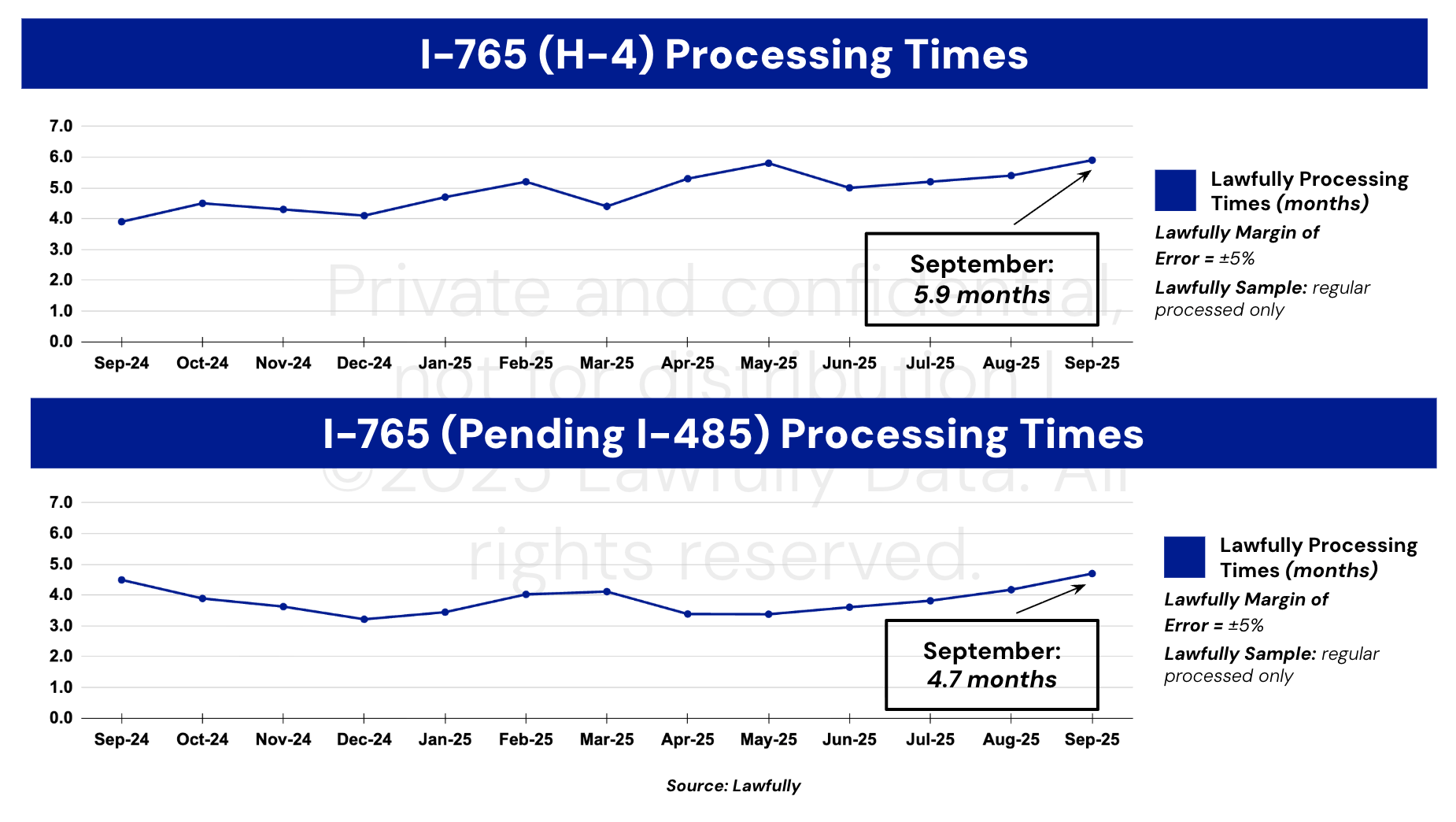
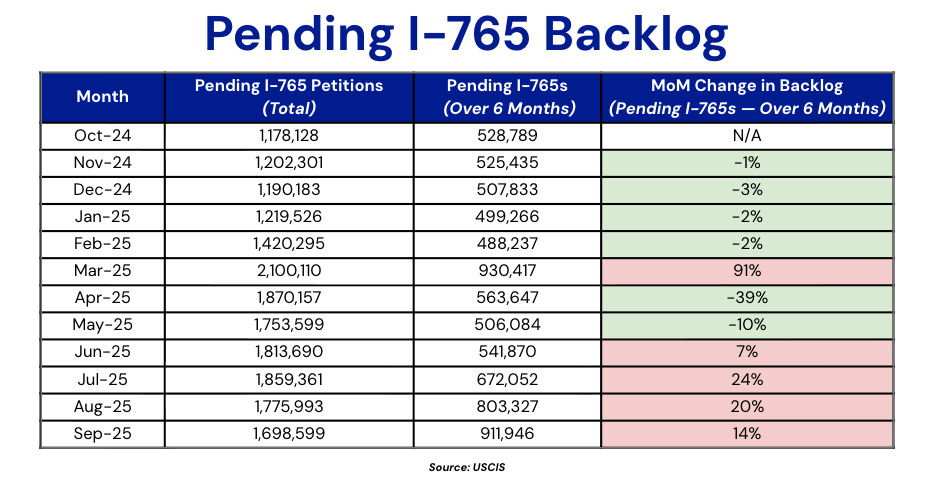
Why it matters: Lawfully’s data shows I-765 processing times are rising, and USCIS’s own data confirms a growing backlog of cases pending over six months.
That makes it very likely that many companies will soon face work-authorization gaps for employees working on an H-4 EAD and employees with pending I-485 (AOS) petitions.
Litigation: Multiple legal challenges are coming—but an injunction isn’t necessarily imminent, or guaranteed at all.
How to be proactive: Audit upcoming EAD expiration dates for your clients or employees and compare them to real-time USCIS processing times.
Because actual processing times will now determine when your clients or employees can—and can’t—work.
Email me at [email protected] if you’d like access to real-time USCIS processing data through Lawfully Intelligence.
Remember: USCIS publishes I-765 processing times but as a lagging metric—based on how long it took 80% of cases to finish in the past six months—which is too little, too late if you’re a practitioner.
2. Watch for H-1B processing disruptions post-shutdown
📅 Day 31 of the shutdown: And practitioners still can’t submit or receive certified LCAs from DOL—stalling all new H-1B filings.
The quiet problem: DOL normally certifies ~1,000 LCAs per day (30–35k/month)—about the same number of H-1B petitions that USCIS typically receives and completes each month.
What that means: Once the government reopens, USCIS could see 2x the normal number of monthly H-1B filings—60–70k filings in a single month.
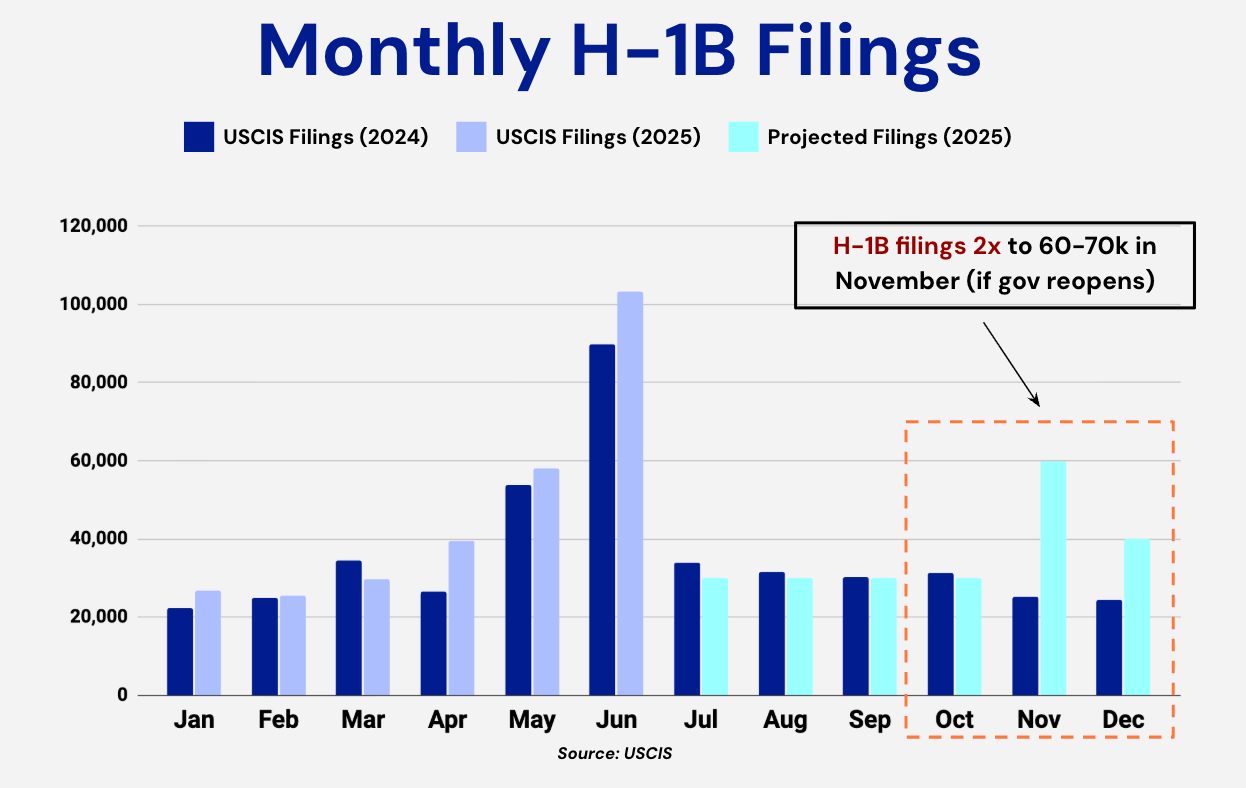
Roughly half of all H-1Bs use premium processing—so when filings resume, officers must meet tight deadlines for 2x the normal caseload.
USCIS also always has 40–70k H-1Bs pending at any given time. Those are likely the cases officers are working through right now—which means we may see a temporary processing time decrease in Lawfully’s October data.
During cap season: USCIS pre-plans for the seasonal surge in H-1B filings by reassigning officers to handle the increased load. It’s unclear if that will happen when the government reopens—and increasingly difficult for USCIS to pull of with continued staff attrition.
Bottom line: The longer the shutdown lasts, the bigger the eventual surge in H-1B filings—and the higher the risk of processing delays at USCIS.
3. Intel on the new rule for EB-2 NIW and EB-1A criteria
This one’s largely flown under the radar so far—but it’s going to be a big deal very soon.
Right now, all that’s publicly known about this proposed rule is what’s in the screenshot below. Not much.
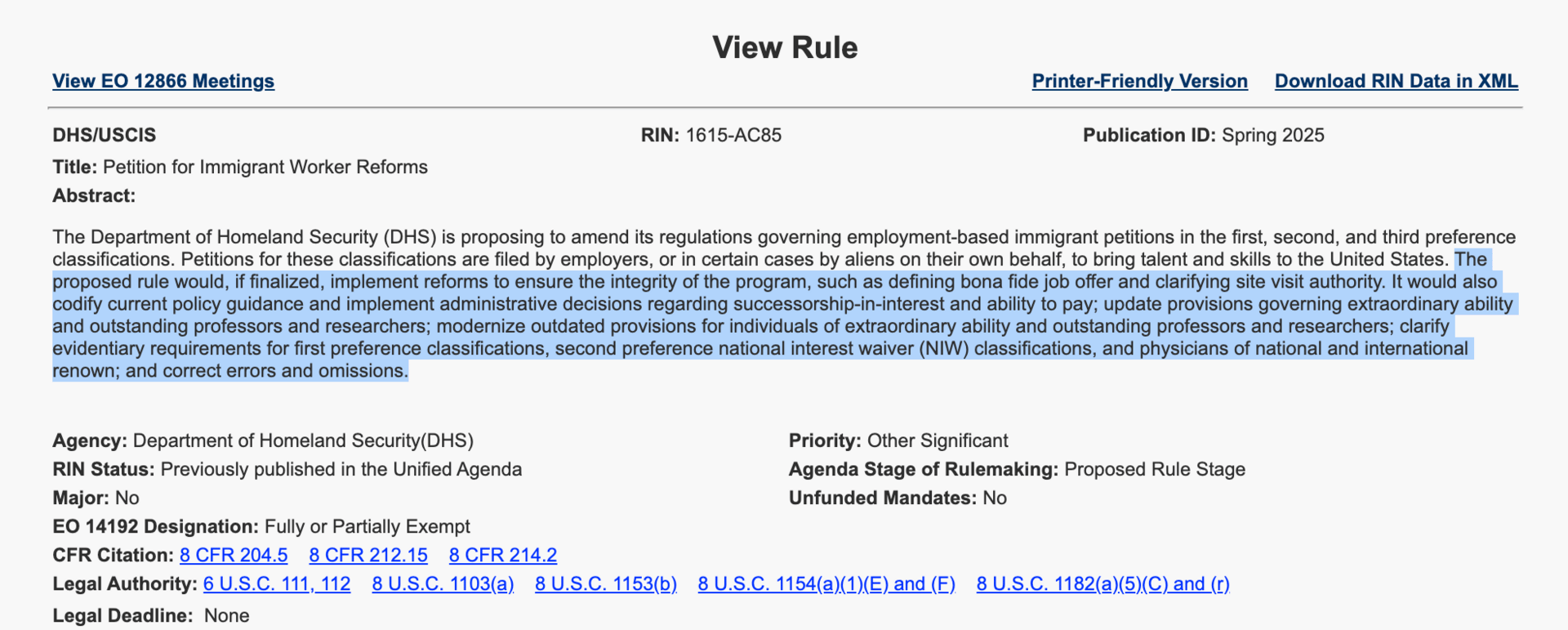
But here’s what we do know: Lawfully’s data shows EB-1A and EB-2 NIW approval rates began falling in Mar 2025 and continued through Sep 2025. The latest USCIS data dump covering Apr–Jun 2025 confirmed that decline.
In yesterday’s Immigration Insiders meeting, Doug Rand—former Senior Advisor to the USCIS Director—confirmed that revising the regulations, criteria, and policy guidance for employment-based green cards was on USCIS’s agenda during his time in the Biden administration. He caveated that this administration will very likely take a different approach—but the takeaway is that internal teams at USCIS are already working on these proposed reforms.
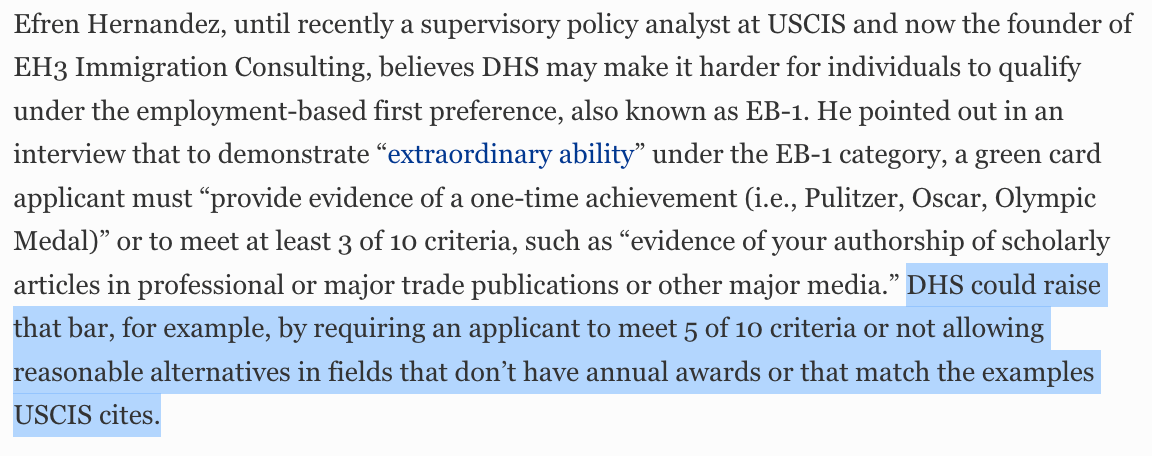
Then in a recent Forbes article, Stuart Anderson interviewed longtime (now former) USCIS policy veteran Efren Hernandez, who offered informed speculation on what could be included in the rule.
Then there’s the rumor mill, which is speculating that Trump’s proposed Gold Card could be implemented through the EB-2 NIW and EB-1 categories. I can’t offer any additional intel here yet—but I’m working on it.
Looking ahead: Expect the full rule text within 1-2 months. The full text will provide clearer view of how USCIS plans to reshape the current landscape for employment-based green cards—and we’ll cover what it means for practitioners in detail here.
- - -
📩 That’s it for this week! I want to hear your feedback and questions, so drop me a note anytime at [email protected].
See you next week!